
Leaving home for a few days usually means thinking about a lot of things: suitcases, flights, ensuring to lock the door. What rarely crosses your mind is the freezer in your kitchen. If the power cuts out while you’re away, everything inside can thaw and then freeze again once electricity returns. When you get back, the food may still look solid, even though it warmed enough to become unsafe.
That uncertainty is exactly why a small trick involving a cup of ice and a coin has spread across emergency-preparedness guides. It gives you a way to check whether your freezer stayed cold the entire time you were gone.
The Simple Coin-in-the-Freezer Trick
@cookistwowWhy are we leaving a #coin in the #freezer? 🤨🪙 The reason why is amazing, such a great hack for the upcoming vacations ⬇️ 💧Fill a glass with water and freeze. Before leaving, place a coin on the frozen surface. ❄️When you return, you will be able to see if the coin is still on the surface, where you left it, or if it has sunk into the ice: this will mean that the power went out during your absence, and therefore the products in the freezer may have been defrosted. Do you know other useful kitchen tricks? Let us know in the comments 👇 #cookistwow #cookisthacks #hacks #kitchen #tricks #useful #amazing #easy #quick #homemade #freezer #ice #summer #vacations #foodtok♬ A Summer Place - Hollywood Strings Orchestra
It involves filling a small cup or container with water and freeze it until solid. Once the ice is firm, place a coin on top and return the cup to the freezer. From that point on, the coin acts as a marker. Its position later reveals whether the ice ever softened or fully melted.
If the freezer stays cold, nothing changes and the coin remains on the surface. If temperatures rise enough for melting to occur, the coin drops into the water. When the freezer cools again, the water hardens and traps the coin in its new position. Checking the cup when you return gives you a quick read on what happened while you were away.
It Has Limits
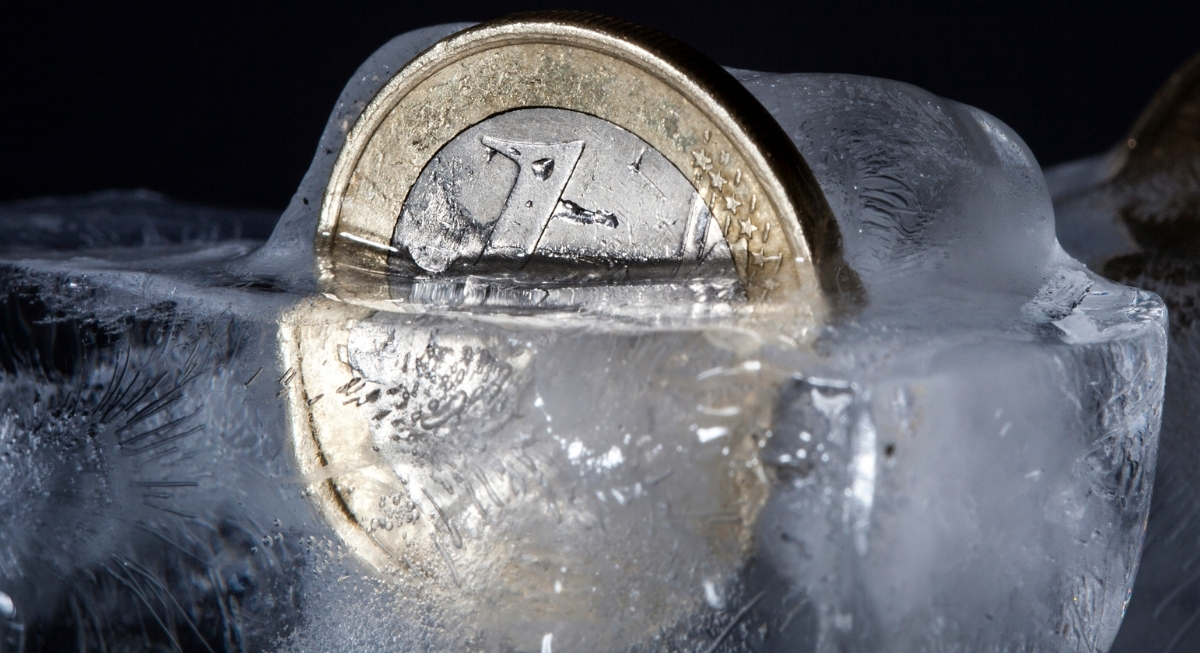
Image via Getty Images/ollo
The coin only tells part of the story. It doesn’t measure time or temperature, which means it won’t tell you how long the outage lasted or how warm things got, and it can miss certain scenarios.
Ice doesn’t always melt evenly, so partial thawing can occur without moving the coin much. That means the result isn’t always definitive. Because of that, the cup-and-coin setup works best as an early warning, not a final decision.
Looking at the food itself can provide additional clues. Ice crystals on items usually indicate they stayed frozen. Packages that appear soggy, stuck together, or unevenly frozen may have thawed at some point.
Another method is to freeze a small bag of ice cubes. If those cubes fuse into a single solid block, it suggests the freezer warmed long enough for melting to occur.
What Actually Determines Food Safety
Food safety comes down to temperature and time. A freezer should stay at 0°F or below to keep food properly frozen. Once food rises above 40°F, it enters a range where bacteria grow more quickly. If it remains in that range for about two hours or longer, the risk increases.
A closed freezer can hold safe temperatures longer than most people expect. Frozen food typically remains safe for about 48 hours in a full freezer and about 24 hours in a half-full one, as long as the door stays shut. After power returns, items can often still be used if they contain ice crystals or remain at or below 40°F.