
You may have seen the Mona Lisa on coffee mugs, phone cases, textbooks, and museum walls, but Leonardo da Vinci’s painting still holds a number of mysteries that were uncovered only in recent decades.
Thanks to modern scanning tools and close analysis, researchers have revealed details that most eyes miss: layered symbols, revised brushstrokes, optical illusions, and misunderstood features. These findings alter our perception of the painting and the person behind it.
A Veil Linked to Childbirth

Credit: iStockphoto
Close inspection of the painting shows a thin, transparent veil draped over Mona Lisa’s head and shoulders. This type of veil, known as a guarnello, typically appeared in portraits of women who were pregnant or had recently given birth. According to experts, the portrait may have been commissioned to mark the birth of her second child.
Eyebrows That Faded with Time
Credit: Wikimedia Commons
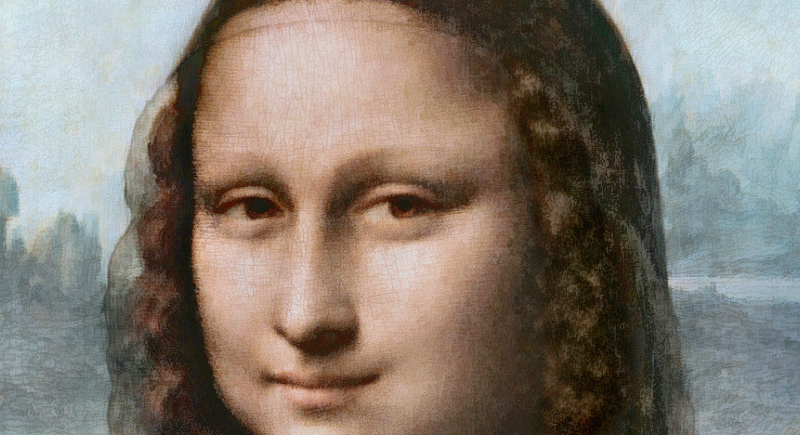
For centuries, viewers believed that Mona Lisa lacked eyebrows by design. However, that assumption did not last long because high-resolution imaging led to the discovery of a faint brushstroke right above her left eye. This confirmed that the artist actually painted eyebrows and eyelashes, but they were removed over time due to restoration efforts and aging.
A Background with Uneven Horizons
Credit: Getty Images
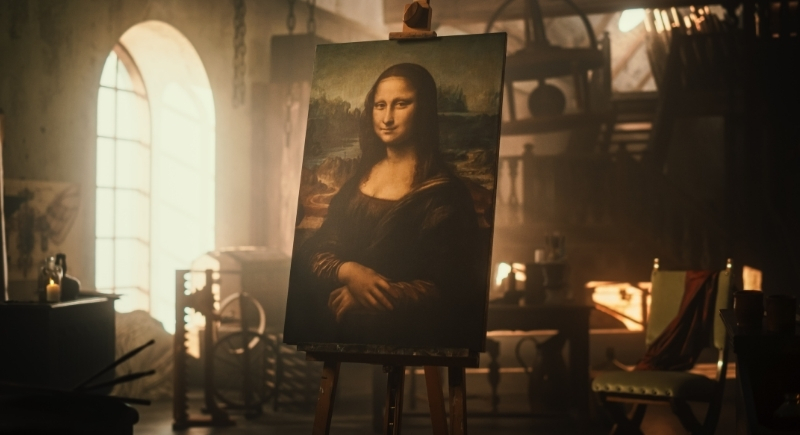
The landscape behind Mona Lisa appears peaceful, but if you look closely, you will see horizon lines on each side sit at different heights. This design causes the figure to appear subtly different depending on where the viewer's focus is. Leonardo used this technique to create visual movement without the use of motion.
An Embedded Portrait Beneath the Surface

Credit: iStockphoto
Advanced scanning technology identified another portrait concealed under the visible one. This earlier version depicts a woman with a different expression and posture, indicating that Leonardo revised the painting rather than discarding it. He slowly reworked the image, layer by layer, and eventually refined the masterpiece.
A Smile Built on Visual Science

Credit: pixabay
Long before scientists described the process, the painter employed techniques that closely matched how people actually perceive. Neuroscientist Margaret Livingstone later explained the same effect using the concept of low spatial frequencies, which the brain processes more easily in peripheral vision than in direct focus. Additionally, the illusion does not depend on the shape of her mouth, but rather on how light and shadow guide perception.
Letters Hidden in Her Eyes

Credit: pexels
It is well known that Leonardo da Vinci explored codes, symbols, and hidden meanings throughout his extensive body of work. That reputation gained new support in 2010 when individuals using magnification found tiny symbols embedded in the Mona Lisa. In one eye, they spotted what looks like “LV,” while other markings can also be seen near the bridge in the distant view.
A Hand Position That Possibly Changed Midway
Credit: Wikimedia Commons
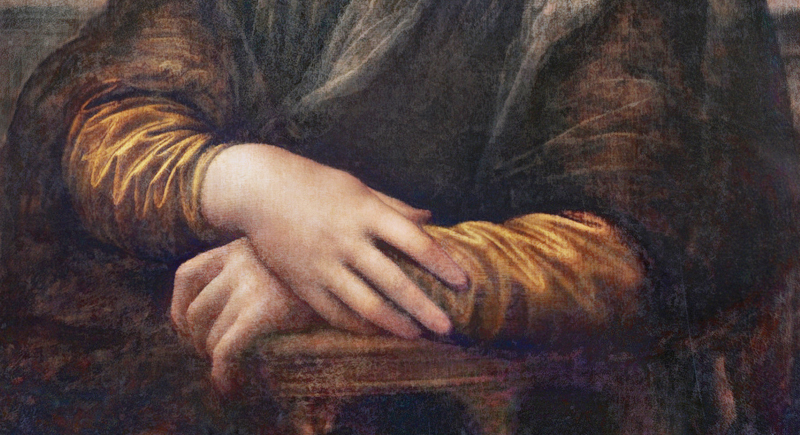
Another interesting discovery came from imaging studies showing that Mona Lisa’s left hand was initially painted in a different position. The artist changed the placement of her fingers while working and left the original layout buried beneath the final layers. The adjustment reveals how the painting evolved through small and deliberate changes.
A Hairstyle Misread for Centuries

Credit: Getty Images
Many early individuals assumed her loose hair suggested an improper status. That belief influenced theories about her identity for generations. However, modern analysis reveals that her hair was pulled back and covered by a veil, although time has made the veil difficult to discern. This detail aligns with Renaissance customs for married women.
Possible Animals Concealed in the Landscape

Credit: Canva
Artist Ron Piccirillo proposed that animal forms appear within the background when viewed at certain angles. He identified shapes resembling creatures woven into the terrain. While not universally accepted, the theory fits Leonardo’s habit of embedding layered meaning in his work. The possibility adds depth to a landscape many assume serves only as scenery.
Damage That Changed How It’s Displayed

Credit: iStockphoto
What most people don’t realize is that the famous work of art has survived more than just centuries of aging. In 1956, someone threw a rock at the painting and damaged her elbow. Earlier that same year, another person had attacked it with acid. These events forced the Louvre to increase protection, eventually enclosing the painting in bulletproof glass.