
Most of us hesitate before using a public restroom. You step inside, take a quick look, and decide if you can deal with it or not. In Paris, that split-second decision is far less common. The city’s self-cleaning toilets are designed so that each person enters a space that has just completed a full cleaning cycle. Not earlier in the day. Not at some scheduled interval. Right after the previous user leaves. The system refreshes itself between visits, which changes expectations.
A Toilet That Resets Itself Every Time
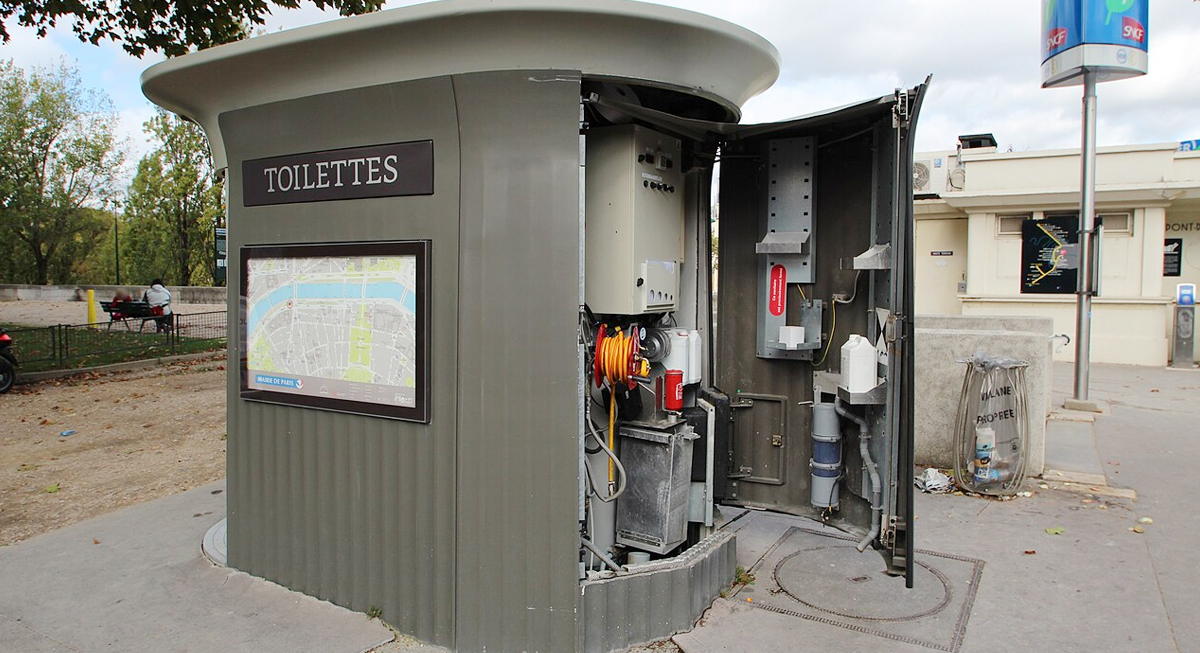
Image via Wikimedia Commons/Lionel Allorge
In much of Europe, the word “toilet” refers to the entire enclosed facility, not just the seat. In Paris, these units are compact, standalone booths commonly known as sanisettes. Each one operates as a self-contained space that automatically cleans itself between users.
The process begins as soon as the user exits. Once the door closes, sensors confirm the unit is empty. The system then locks and starts the cleaning cycle automatically. There’s no button to press and no staff required to trigger it.
What Actually Happens During the Cleaning Cycle
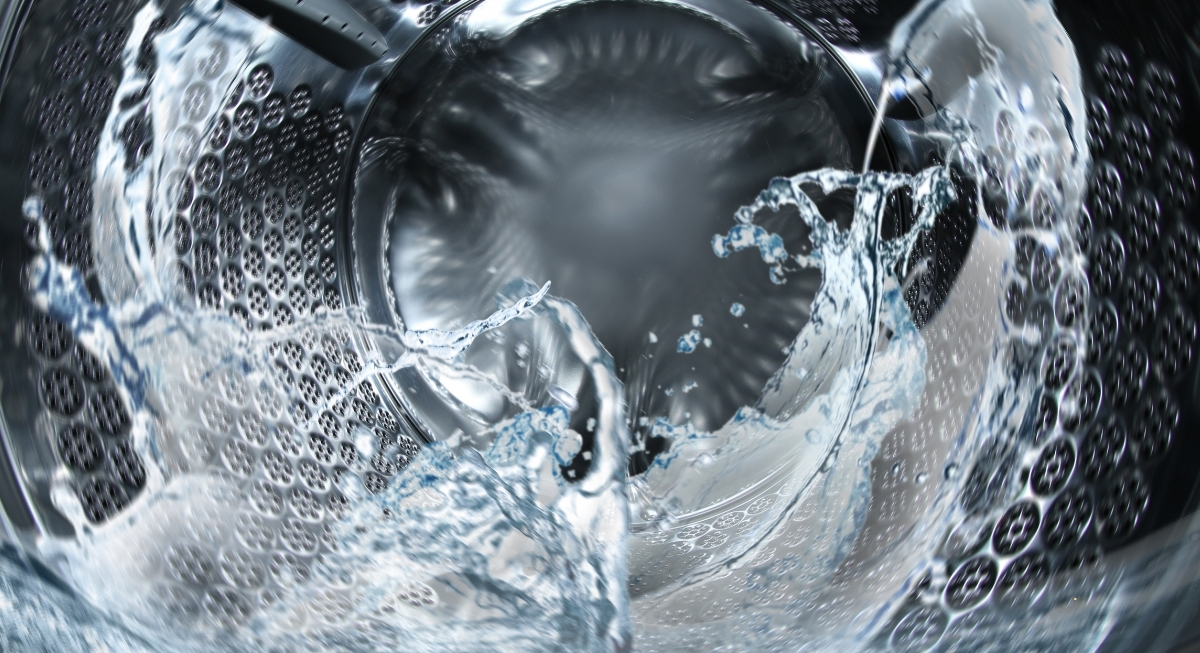
Image via Canva/Africa images
Inside the unit, several mechanisms work together to clean and reset the space. In many models, the seat either folds away or rotates, which allows it to be cleaned from multiple angles. Some versions pass the seat through a built-in cleaning and drying system, while others rely on integrated components to scrub and disinfect it in place.
Once that step is complete, water jets activate to clean the bowl, interior walls, and surrounding surfaces. The floor is also rinsed and treated with disinfectant, which is why it may still feel damp when the unit becomes available again. A wet floor in a public restroom usually raises concerns, but not in these units.
The full cleaning cycle typically runs between about 40 seconds and two minutes. Newer models in Paris have shortened that turnaround time, with some completing the process in roughly 30 seconds to keep up with heavy use.
A System Designed for Busy Cities
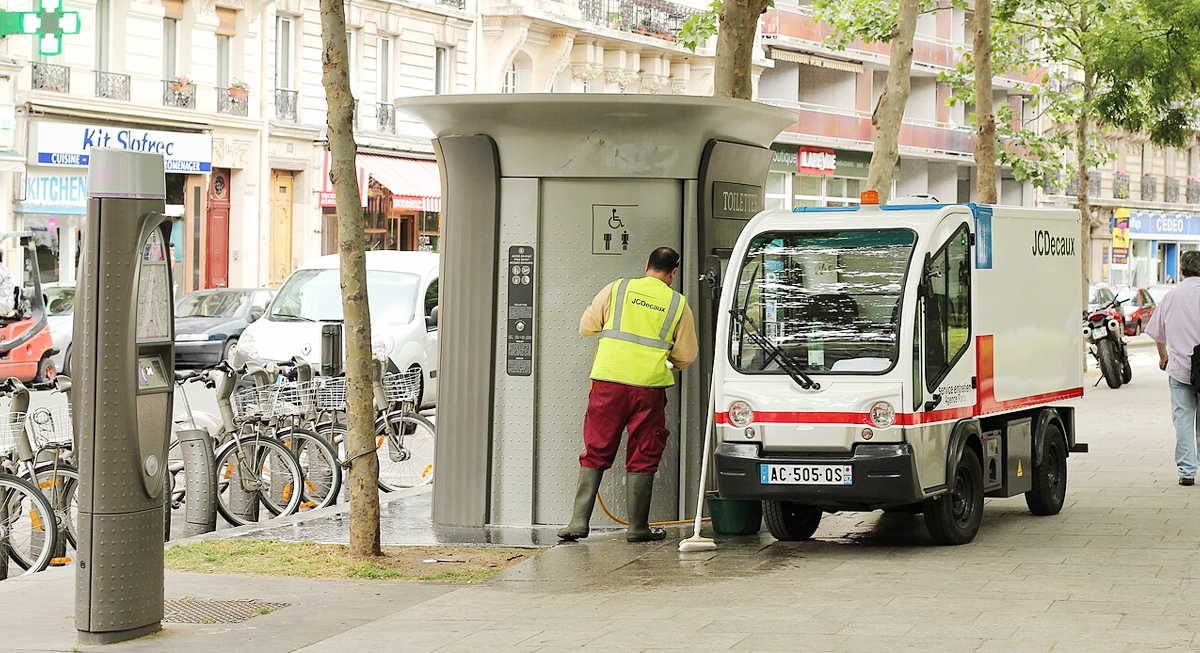
Image via Wikimedia Commons/Coyau
Traditional public restrooms depend on scheduled maintenance, which can vary widely depending on location and foot traffic. These toilets were developed to handle the realities of high-traffic urban areas, where maintaining hygiene can be a constant challenge.
JCDecaux introduced the first self-cleaning public toilets in Paris in 1981, building on earlier sanitation infrastructure. Since then, the concept has expanded far beyond the city. Today, more than 2,500 units operate across 28 countries, serving millions of people every year. Paris alone has hundreds of these units, with annual usage reaching into the tens of millions.
Even with automation, the system still relies on regular upkeep. Maintenance teams handle servicing, repairs, and inspections to keep everything running smoothly. Design updates have also improved accessibility. Many units are built to accommodate users with reduced mobility and may include features such as voice instructions, braille, and clearer visual guidance.
The Trade-Offs Behind the Convenience
The system does come with a few limitations. Each cleaning cycle creates a short delay before the next person can enter, which can lead to brief waits in busy areas. There’s also the cost. These units require significant investment to install and maintain.
In many cities, that cost is offset through advertising infrastructure rather than direct user fees.Newer designs aim to improve efficiency, reducing water and energy use while shortening cleaning times.