
There are delays, and then there are delays that turn into stories people repeat for years. The incident happened on Japan’s Shinkansen network, a rail system that moves hundreds of thousands of passengers every day with near-military precision. A train arrived 35 seconds behind schedule, and this was enough to prompt the conductor to apologize to every passenger on board, and according to multiple social media posts, issue refunds for their tickets. Central Japan Railway Company data shows the average Shinkansen delay in recent years has hovered around 24 seconds. A delay longer than that crosses an internal threshold, even if most riders barely feel it. In Japan, the schedule is treated as a promise.
Why There Are Speculations About Refunds

Image via Getty Images/1001Love
Japanese rail operators follow strict rules about accountability, and staff are trained to act immediately when service deviates beyond acceptable margins. Apologies come first, explanations follow, and compensation closes the loop.
This approach reflects the expectation that public services respect people’s time. Train operators assume passengers have planned connections, work schedules, and responsibilities built around published timetables. Missing that target, even briefly, carries consequences for the operator.
This Wasn’t a Fluke
The 35-second delay fits into a longer pattern that often surprises people. In 2017, the Tsukuba Express issued a public apology after a train departed 20 seconds early. The following year, another Shinkansen operator apologized for leaving 25 seconds ahead of schedule, calling the mistake serious. Leaving early matters just as much as arriving late because it breaks the contract with passengers. Trains are expected to arrive when promised and depart when promised, down to the second.
The System Behind the Precision
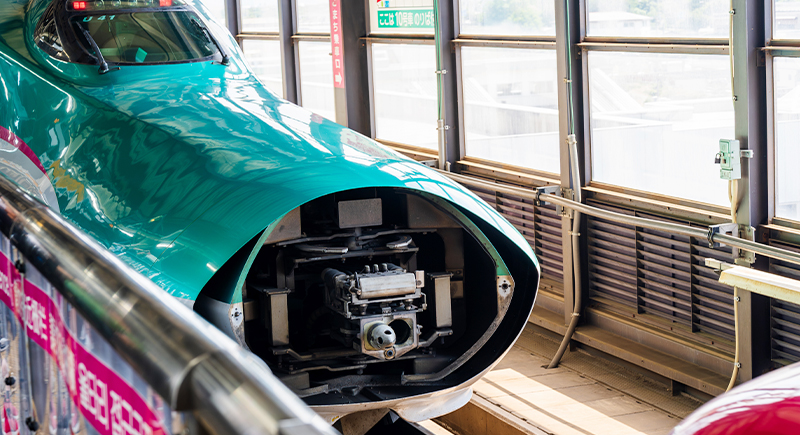
Image via iStockphoto/CHENG FENG CHIANG
This level of consistency relies on design choices made over decades. Japan separates high-speed trains, regional services, and freight traffic to reduce interference. Advanced signaling systems monitor train positions in real time.
Passenger behavior is also important. Boarding lines form early, doors close quickly, and platform movement stays orderly. The cooperation shortens turnaround times and keeps schedules intact during peak hours in cities like Tokyo, where rail density leaves little room for error.
Why Japan Needs This Standard
Japan’s geography and population density make rail reliability essential. Greater Tokyo alone is home to roughly 14 million residents, with far more passing through daily. Car-centered commuting at that scale would strain space, infrastructure, and time. Trains carry the burden instead, which means failure is not an option.
Precision keeps cities moving, businesses running, and personal schedules intact. Small delays ripple quickly in a system operating at this volume.