
Whittier, Alaska, doesn’t follow the typical town layout. There’s no spread of neighborhoods, no clusters of homes, and no real sense of distance between residents. Instead, nearly the entire population lives inside a single 14-story structure called Begich Towers.
Whittier, located about 60 miles southeast of Anchorage, occupies the edge of the Passage Canal, surrounded by steep mountains and open water. Getting there requires passing through a 2.5-mile tunnel that allows traffic in only one direction at a time and closes overnight. For long periods, reaching the town depended on the weather and limited transport options, so being cut off was simply part of life there.
That isolation is one reason the town functions the way it does today.
One Building, Nearly the Entire Town
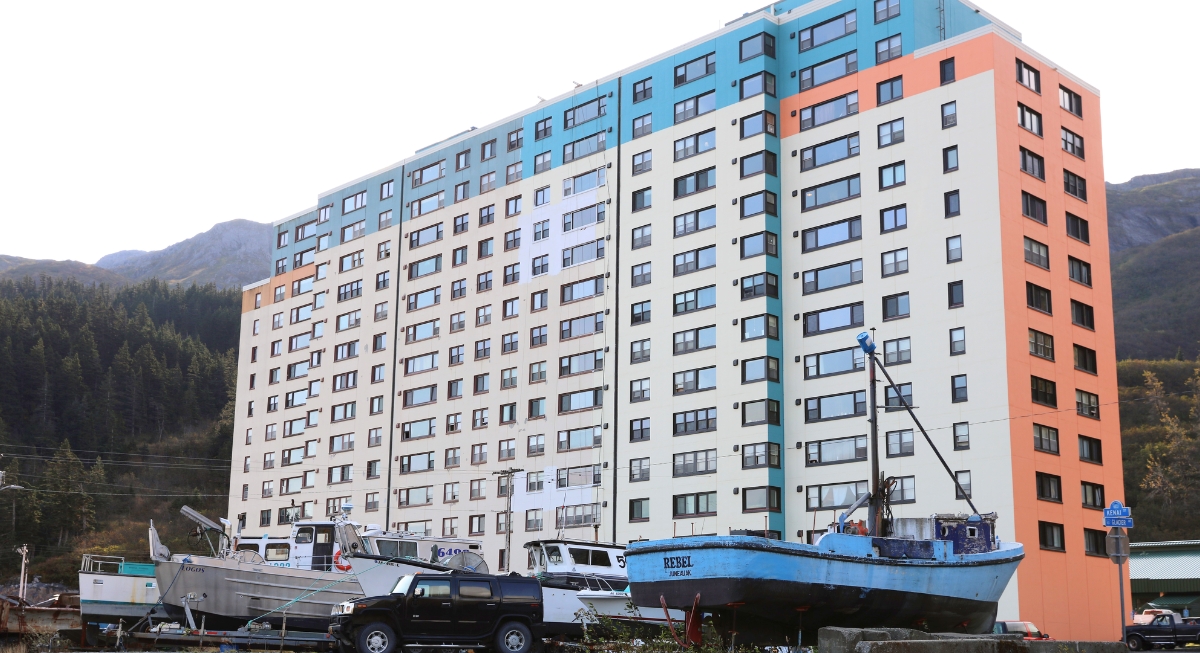
Image via Wikimedia Commons/Enrico Blasutto
Begich Towers rises at the edge of Whittier as the center of daily life. Originally built as a military barracks during the mid-20th century, the structure was designed to house hundreds of military personnel and their families in a harsh, controlled environment.
The U.S. Army developed the area as a secure port by taking advantage of its natural protection from surrounding mountains and frequent cloud cover. After the military left in 1960 and the population dropped, the remaining residents consolidated into this building instead of spreading out across the landscape.
Today, with a population of roughly 200 to 260 people depending on the season, most residents live within its nearly 200 apartments. The building contains far more than housing. Inside, there is a post office, a small grocery store, a laundromat, a church, and a health clinic capable of handling basic care. At one point, even law enforcement operated from within the same structure.
Built Around Climate and Access
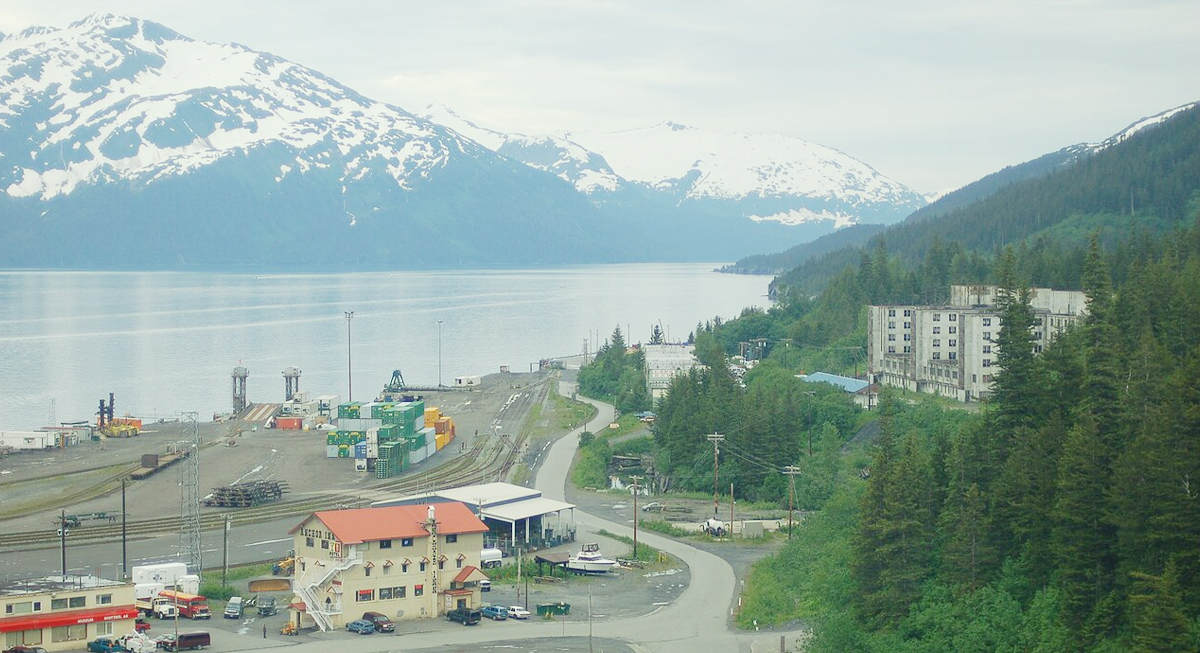
Image via Wikimedia Commons/Andrew Otto
Whittier’s environment plays a central role in how the town operates. Annual snowfall can reach 22 feet, and winter winds regularly exceed 60 miles per hour. Extended periods of rain and snow make outdoor movement unpredictable, and basic tasks like commuting or running errands can quickly become difficult.
Living in a single building simplifies those challenges. Residents can move between essential services without exposure to the weather, and many routines happen entirely indoors. In some cases, even school access is integrated into the system.
Students use an underground tunnel connecting the building to Whittier Community School, avoiding the need to step outside during harsh conditions.
Daily Life in Close Quarters
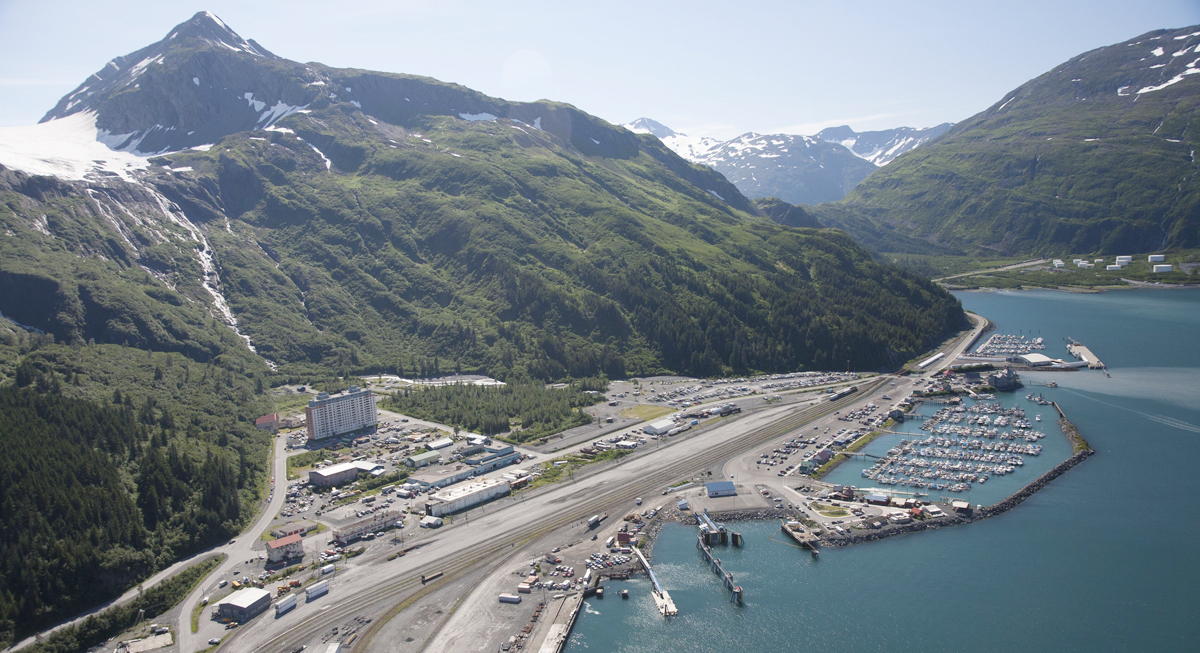
Image via Wikimedia Commons/Forest Service Alaska Region, USDA
When most of a town shares the same building, everyday routines start to overlap. You run into the same people without planning to, whether you’re doing laundry, grabbing groceries, or checking the mail. For some, that builds a sense of connection and support. For others, it takes getting used to having less personal space.
Work and home life can overlap in ways that aren’t common elsewhere. Teachers may see their students outside class just by stepping into the hallway. Local businesses operate within the same structure as their customers live. Even basic errands can feel like part of a shared routine rather than separate activities.
Still, the building allows for flexibility. Some residents value the social aspect, while others keep to themselves, using the same setup to maintain distance when needed. The environment doesn’t dictate one experience; it accommodates several.
Supply, Movement, and Self-Sufficiency
Because Whittier relies on a single access point, supply chains require planning. Most goods are brought in from Anchorage, and local stores stock essentials based on those trips. Storage becomes important, and residents often keep reserves of food and supplies to account for disruptions caused by weather or tunnel closures.
The tunnel itself influences how people schedule their time. Traffic moves in alternating directions at set intervals, and missing the final crossing of the night can mean waiting until morning. While that constraint can be inconvenient, it also reinforces the rhythm of life in the town, where timing and preparation matter more than spontaneity.
Despite these limitations, the building’s internal setup reduces the need for constant travel. Many daily needs can be met without leaving, which offsets the challenges of reaching the outside world.