
Many travelers share a familiar moment of frustration when opening a suitcase after a long trip and spotting creases across clothing that looked fine before boarding. This primarily occurs because packed clothes shift and fold sharply under pressure. Even well-organized luggage is subject to frequent handling and movement, which accelerates wrinkling. A few simple, non-iron hacks can significantly minimize these creases.
Setting the Wrinkle-Free Foundation

Image via Canva/Africa images
The first line of defense begins with selecting fabrics that naturally resist creases. Some materials wrinkle almost instantly in a suitcase, while others remain smooth with minimal effort. Synthetic materials, such as polyester, nylon blends, and fabrics containing elastane, resist creasing far better than high-maintenance materials like linen and crisp cotton.
These resilient fabrics tend to recover quickly after being unpacked. Selecting them establishes a strong foundation for the remainder of your packing strategy.
Optimized Packing Techniques
Once you’ve selected your materials, the next step is to perfect your packing technique, starting with rolling clothing. Rolling remains a preferred method among frequent travelers because it minimizes sharp creases and keeps items compact. Soft fabrics, such as knits and cotton jersey, do exceptionally well with this technique.
Lay each piece flat, smooth it thoroughly, and roll it firmly enough to maintain its cylindrical shape. Since rolled clothing shifts less in transit, it is more likely to stay smooth. However, even perfectly rolled items don’t always stay in place, which is why using packing cubes to compartmentalize your belongings is important.
Packing cubes add structure inside a suitcase. By grouping items and applying slight compression within each cube, you reduce the friction and movement that lead to creases. Cubes also make unpacking more efficient since everything remains organized rather than settling into one mixed layer.
In-Transit Protection Hacks
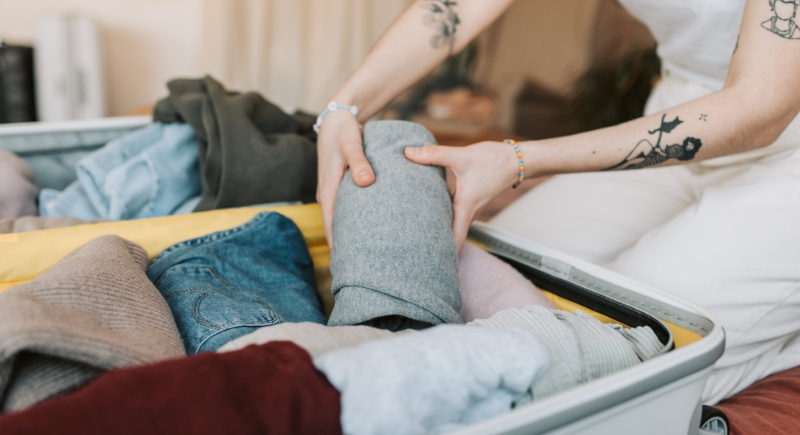
Image via Pexels/Vlada Karpovich
Beyond the main structure of your bag, several small tactics provide extra protection for delicate items. For example, placing sheets of tissue paper between layers of clothing dramatically reduces friction. This thin buffer helps delicate fabrics glide against one another instead of catching and creasing as the suitcase moves.
It is especially effective for items that wrinkle easily, such as tailored shirts, dresses, and skirts. Since tissue paper is lightweight, it is easy to incorporate into any packing plan. For items that require maintaining their structure, the garment bag technique can help minimize deep folds. Many travelers place a lightweight garment bag on top of rolled items so it rests without significant folding.
You should also use small items to maintain the shape of larger garments. Filling dress shoes with socks or placing tissue paper inside collars helps them retain their intended shape by preventing misshapen items from pressing awkwardly into surrounding fabrics.
Finally, avoid overpacking to prevent compression wrinkles. An overfilled suitcase compresses clothing excessively. Leave some space for garments to settle more naturally. Planning outfits ahead of time helps you avoid unnecessary additions and keeps the load manageable.
Post-Arrival Refresh and Quick Fixes
Even with the best packing efforts, minor creases can still appear, which is why your arrival routine is critical. When you reach your destination, hang your clothing immediately upon arrival. Gravity naturally helps smooth light creases.
For slightly deeper wrinkles, if you place clothing in a humid bathroom while the shower runs, it can assist the recovery process. For quick fixes, consider bringing a handheld travel steamer for touch-ups or using a commercial wrinkle-release spray. The steamer relaxes fabric fibers within minutes, and the spray can be utilized for small problem areas.