
Eating well during a travel day can feel challenging, especially when routines change, and choices depend on what’s available at the airport or in the air. Those limits often leave travelers unsure of what to choose, what actually supports their energy and digestion, or how to avoid feeling drained midway through a trip. With a little planning, though, it’s possible to stay energized, hydrated, and comfortable throughout the trip.
Build a Better Base Before Takeoff

Image via iStockphoto/eyecrave productions
Travelers often encounter snacks and meals that are convenient but not always the most sustaining. Packing your own options makes it easier to rely on foods that help maintain steady energy.
Items like whole-grain sandwiches, nuts, seeds, Greek yogurt, vegetable sticks, olives, and simple salads travel well when stored in secure containers. These foods provide more lasting fuel than sugary or heavily processed alternatives.
Most solid foods can be carried through security, and an empty water bottle can be refilled once you reach the gate.
Hydrate Early and Often
Drinking water consistently before and during a flight helps maintain energy levels and reduces discomfort. Sipping water regularly is more effective than drinking large amounts at once.
Alcoholic and caffeinated drinks can increase fluid loss and make rest harder to achieve. Carbonated beverages may also contribute to gas or bloating for some travelers. Water remains the most reliable option throughout the journey.
Smart Choices at the Airport
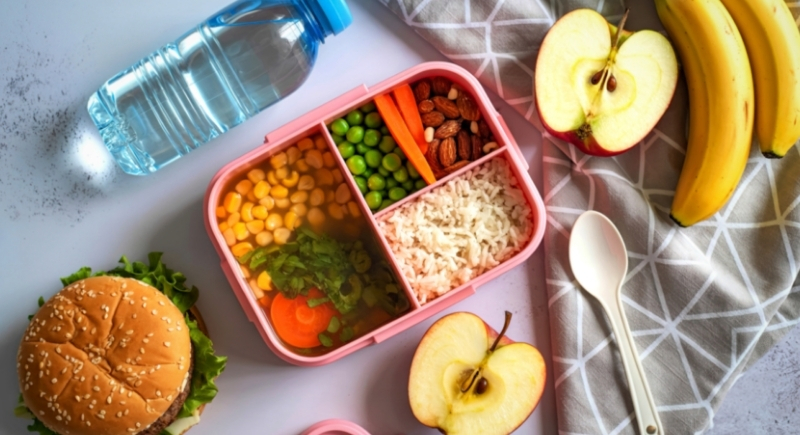
Image via Canva/Stefan Botezatu's Images
Choosing combinations that include lean protein, fruits or vegetables, and a source of complex carbohydrates helps support sustained energy without feeling weighed down.
Snack plates with nuts, fruit, and whole-grain items also work well for short layovers or tight connections.
For people with dietary restrictions or concerns about ingredients, simple items like whole fruit or sealed yogurt cups are good choices.
Support Digestive Comfort
What you eat before and during a flight can influence how you feel. Foods that are easier to digest—such as produce, lean proteins, and balanced snacks—tend to sit more comfortably in your stomach during long travel days.
People with lactose intolerance may prefer to avoid dairy products that commonly cause discomfort. Those who manage allergies should keep any prescribed medications and water within reach. Quick access is important if symptoms arise, and crew members can assist when needed.
Keep Hygiene Front and Center

Image via iStockphoto/izusek
Airports and airplanes involve many shared surfaces. Having a small pack of wipes and travel-sized sanitizer on hand makes it simple to clean your tray table, armrests, and buckle before eating. Washing or sanitizing your hands frequently also helps reduce the likelihood of catching an illness during travel.
Movement plays a role in overall comfort as well. Long periods of sitting can cause stiffness or swelling, so taking short walks in the terminal or performing small movements in your seat can help maintain circulation. Some travelers also use compression socks for additional support.
Plan for Personal Needs
People with medical conditions may need extra preparation. For example, hydration is vital for those managing blood glucose, as fluid balance affects energy and comfort. Warm or room-temperature water can be gentler on digestion for sensitive travelers.
Individuals who experience digestive fluctuations on trips may choose to begin a probiotic routine before they leave and continue it throughout their travels. Certain strains are associated with supporting gut balance and may help reduce discomfort during changes in environment or diet.