
Import debates have been getting a lot of attention this year, and every tariff announcement is setting off another wave of arguments over supply chains. Items you barely think about suddenly matter when countries start reviewing who they do business with. That’s why it feels almost comedic that one of the most stable currencies on the planet runs on a supply line from the Himalayan foothills.
Japan relies on a plant grown in Nepal to produce the paper for its yen notes, and both sides benefit from the exchange. The path between the two countries has become its own curious economic thread.
How A Mountain Shrub Became A Currency Ingredient

Image via Getty Images/Koichi Yoshii
Mitsumata grows in high-altitude areas of Nepal, and its branches produce long, strong fibers that are ideal for traditional papermaking. Japan once grew a substantial amount of it, but aging farmers, fewer successors, and harsher agricultural conditions have reduced domestic production. By the time Japan needed a dependable source for its redesigned yen notes, Nepal had become the strongest option.
Local growers cultivate the shrubs through the warm months. When harvest season arrives, branches are cut and processed through a series of steps, including steaming, peeling, washing, and drying. The work takes patience and accuracy, and entire communities participate in sorting and preparing the bark. Once packaged, the bales move to Kathmandu, then continue by road into India, and eventually ship out of Kolkata toward Japan.
How Nepal’s Bark Turns Into Japan’s Bills
When the bark arrives in Japan, specialists at the National Printing Bureau convert the material into a refined, durable paper. The newest yen notes feature upgraded security elements, including motion-style hologram portraits and inks that respond to different kinds of light. These details require paper that can withstand advanced printing without compromising its strength, which is why Nepali fiber remains essential.
Japan still uses physical cash at a rate higher than many neighboring countries. More than half of all transactions continue in paper form, according to government data, so demand for reliable currency stock stays high. The yen’s refresh cycle happens about every two decades, and the current generation of bills relies heavily on Nepali-sourced fiber.
Income That Reaches Remote Communities
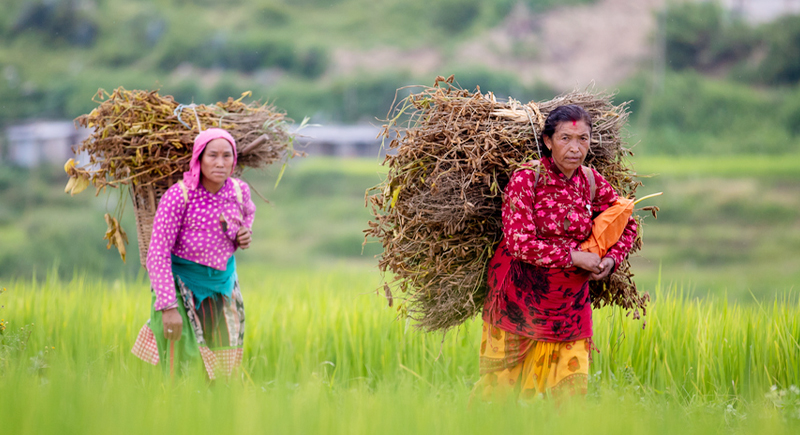
Image via iStockphoto/Rojen Maharjan
Nepali farmers gain steady earnings by supplying the bark. In areas where farming options are limited and jobs are scarce, mitsumata has become a valuable crop. Some farmers who once considered looking for work abroad now stay home because the bark trade offers a more stable income than they could expect through migration.
The partnership also attracted support from Japan’s development agency, which funded training and infrastructure that improved local production conditions. Roads, equipment, and processing facilities have grown gradually through this program.
Trade Routes That Tie Two Economies Together
Nepal exports several categories of handmade paper products, but mitsumata for Japanese currency ranks among the most talked-about links. The supply chain spans thousands of miles and encompasses land transport, shipping routes, and rigorous quality checks. Every step must run smoothly for Japan to maintain its cash production schedule.